Blacksmith Shop At The Museum And Turning Mill
The Museum has constructed a new building 12' x 14' to replicate a blacksmith shop similar to the three that were at the Lyons Turning Mill that supported the many functions of blacksmithing, mainly sharpening stone cutting tools and the cutting tools of the many turning lathes at the mill around 1900. The museum has received a donation from Dan Cantelli representing the Cantelli family of blacksmithing tools, included a forge with a hand operated blower, two anvils one large and small and a large assortment of blacksmithing tongs that belonged to his grandfather Carmine Cantelli. With the establishment of the blacksmith shop and Carmine Catelli's blacksmithing tools the museum is planning to have the blacksmith shop open as part of our outdoor museum where visitors can see a working blacksmith shop similar to one that was at the Turning Mill. The plan throughout the open season of the Museum, April through November is to bring in visiting blacksmith to give demonstrations of blacksmithing. This will include sharpening of drills of the stonecutters also drills of the quarry workers which was a major function in the granite industry and at the Turning Mill. The demonstration will also include the firing up of the forge, the anvil hammering of tools and the final step in the sharpening of the tools the process of heat treating of the tool cutting surface.
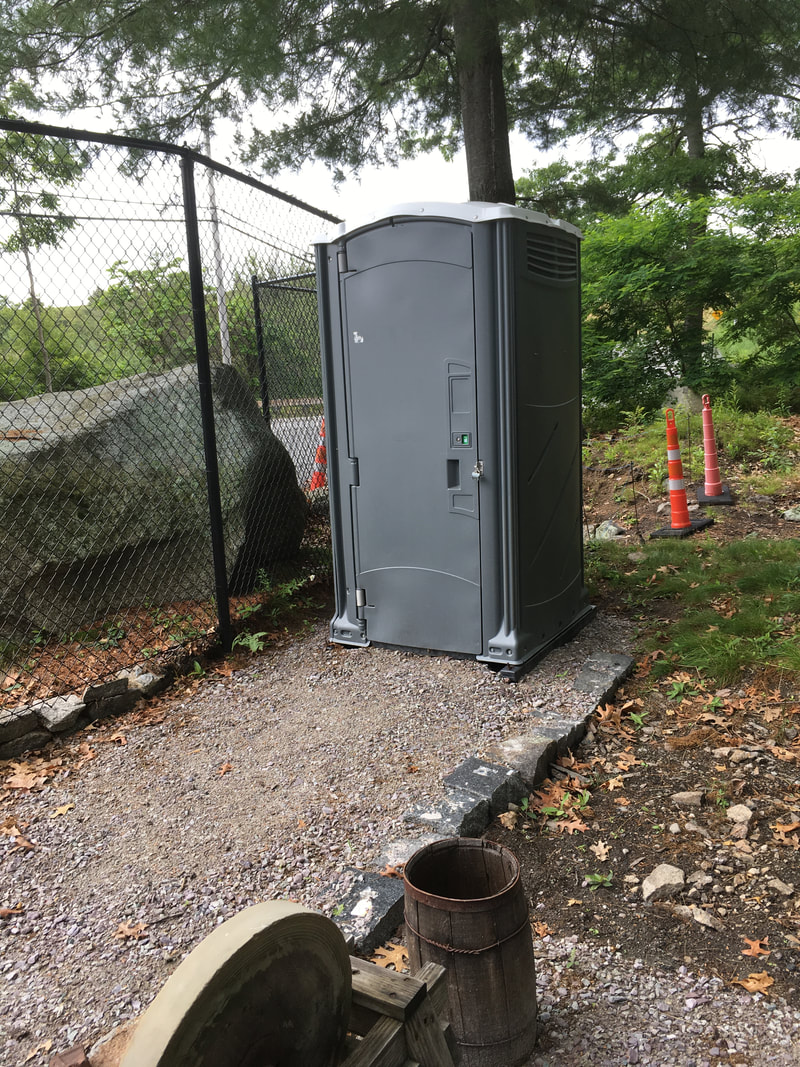
The Museum has purchased a temporary toilet facility for our visitors.
New Building at the Museum
The Quarry Museum has added a new building which will allow the museum to have presentations on many granite industry and supporting industry subjects. The building is equipped with a projector and viewing screen. Gridwall was installed on the interior walls and will allow the museum to create special displays related to the granite industry. The first special display will be a geology display which features over 50 core samples of bedrock from the Berkshires to Massachusetts Bay. The West Quincy sign on the building was the railroad sign from the New York New Haven and Hartford, Granite Branch, at the West Quincy Depot where Quincy granite was shipped from.


